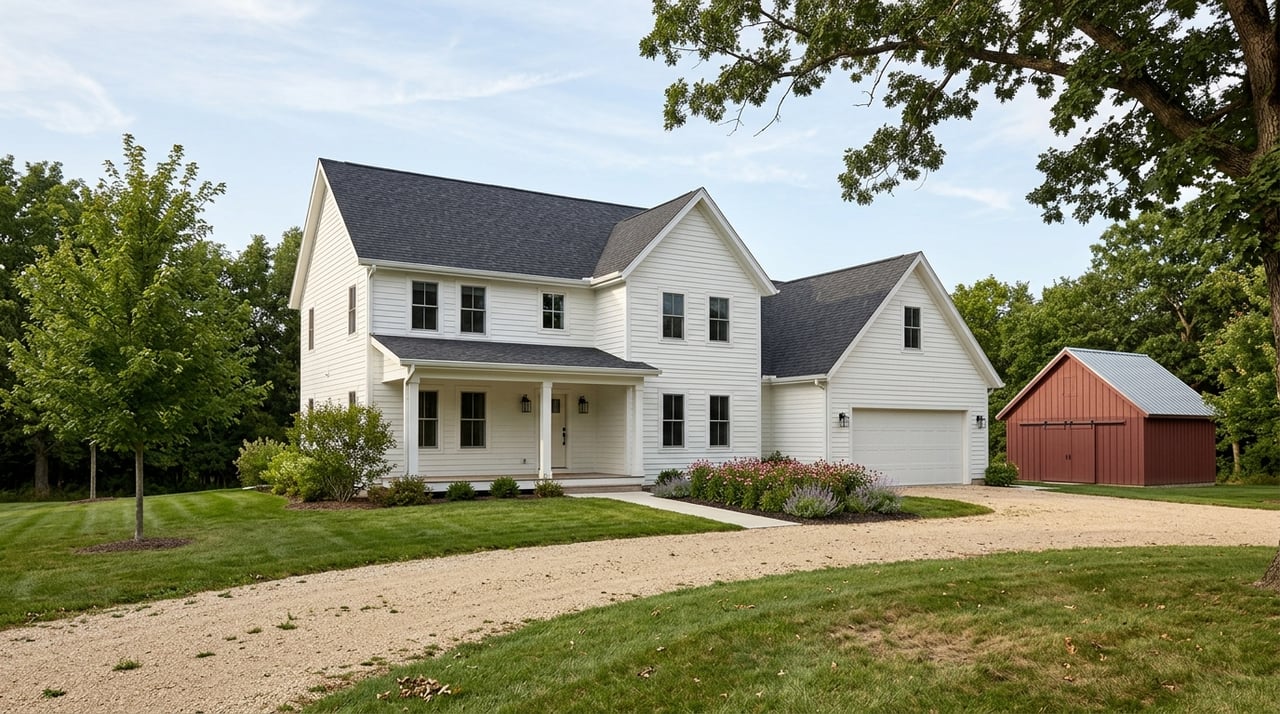
Thinking about buying a hobby farm near Norwood Young America? It can sound simple at first: a little more land, a few animals, maybe a barn or shed, and room to spread out. But once you look closer, these properties sit in a space between a typical home and true farmland, which means the details matter. If you want to buy with confidence, it helps to understand zoning, acreage, utilities, financing, and future use before you make an offer. Let’s dive in.
What a hobby farm means locally
Near Norwood Young America, “hobby farm” is more of a market term than a formal zoning category. In practical terms, it usually describes a residential acreage property that may support a few animals, useful outbuildings, gardens, and extra storage space.
That distinction matters because the rules depend on where the property sits and how it is zoned. A parcel inside the City of Norwood Young America can follow different standards than one in a Carver County township, even if both are marketed the same way.
Why location and zoning matter first
Before you fall in love with the house, make sure you understand the local jurisdiction. Inside city limits, the city handles zoning and permitting. In township areas, Carver County generally handles building permits and land-use questions.
If the property does not fit the zoning code for what you want to do, you may need to seek a variance from the local government. That is why zoning review should happen early, not after inspection or financing is underway.
NYA agricultural transition rules
Within Norwood Young America, the T/A Transition/Agricultural District is designed for low-density residential, open-space, and agricultural transition uses. In that district, farms without livestock are permitted, while farms with livestock require conditional use approval and are limited to a maximum of one animal unit per acre.
The same district also includes important land-size standards. It sets a 2.5-acre minimum for a single-family dwelling, 10 acres for stables or kennels and certain other uses, and 40 acres for a farmstead.
Township and county density standards
In Carver County, planning policy is aimed at directing most urban growth to cities while keeping much of the county’s land in agriculture. In township areas, density is often framed around one dwelling per quarter-quarter section, or 40 acres.
For you as a buyer, this means rural acreage near NYA may offer privacy and flexibility, but it may not support the same level of future building or division that you might assume. A property can feel open and usable while still carrying meaningful limits.
Acreage thresholds to understand
Acreage affects much more than price. It can shape what kind of dwelling is allowed, whether animals are practical, how outbuildings are treated, and whether the property begins to function more like working farmland than a residential acreage.
Here are some of the most useful local size breakpoints to know:
- 2.5 acres: minimum for a single-family dwelling in the NYA T/A district
- 5 acres: an important county animal-density threshold
- 10 acres: tied to agricultural homestead standards and some accessory-structure thresholds
- 20 acres: a county threshold related to agricultural structures
- 40 acres: tied to Ag Preserve and special agricultural homestead standards
These numbers do not define a hobby farm by themselves. They do help explain why a 3-acre property may behave like a country home with extra land, while a 20- or 40-acre parcel may come with a very different set of use, tax, and planning considerations.
Livestock rules are not one-size-fits-all
If your dream includes horses, goats, chickens, or other animals, do not assume the listing description tells the full story. Animal allowances can depend on acreage, zoning, setbacks, and whether the property triggers feedlot rules.
Carver County states that the number of animals allowed depends on acreage, zoning, and setbacks. The county also notes that parcels under 5 acres in agricultural zoning have limits on animal units.
Know what an animal unit means
In Minnesota, one animal unit equals the manure produced by a 1,000-pound steer. That may sound technical, but it is a key measuring tool used in local regulation.
Carver County also restricts new feedlots within 1,000 feet of an existing home to 29 animal units or less. Feedlots of 10 animal units or more must be registered.
For many buyers, the takeaway is simple: if animals are part of your plan, verify the exact rules for that parcel before closing. A property that looks perfect for livestock may still have important legal limits.
Outbuildings can add value and complexity
One reason buyers love hobby farm properties is the extra utility. Common features can include detached garages, sheds, tool houses, detached hobby structures, barns, grain bins, silos, loafing sheds, corncribs, farm machinery buildings, hay barns, and crop-handling structures.
That said, not every structure is treated the same way under local code. Some buildings count as residential accessory structures, while others may be considered agricultural structures with different requirements.
Residential vs agricultural structures
Carver County distinguishes between residential accessory structures and agricultural structures. On parcels of 20 acres or more, agricultural structures must relate to commercial agricultural activity and be exempt from the State Building Code.
Inside city residential districts, accessory structures may be limited by area and design standards. If you want to add a barn, livestock shelter, fence, or large outbuilding, confirm whether it is allowed, how it will be classified, and which permitting office has jurisdiction.
Wells and septic deserve close attention
Rural infrastructure is one of the biggest differences between a hobby farm and a typical in-town home. Private wells and septic systems can affect both your upfront costs and your long-term maintenance.
In Carver County, all residents rely on groundwater. The county states that private well testing is the owner’s responsibility, and the Minnesota Department of Health recommends testing private wells annually to every two years depending on the contaminant.
What to test in a private well
Carver County’s guidance highlights several key water concerns:
- Bacteria
- Nitrate
- Arsenic
- Lead
- Manganese
A clean-looking property does not tell you what is in the water. Well testing should be part of your due diligence, especially if you are buying acreage for long-term living or animal use.
Septic transfer rules in Carver County
Septic is just as important. Carver County requires a compliance inspection of subsurface sewage treatment systems before property transfer, and the seller must disclose the system status.
If the system fails, it must be repaired or replaced before sale, or an escrow arrangement must be created. For buyers, this makes septic review a central part of the transaction, not a side issue.
Financing can be different on rural acreage
Financing a hobby farm near Norwood Young America is often possible, but not always in the same way as a standard suburban home. The biggest question is whether the property is still considered primarily residential.
USDA financing can work for some rural properties. USDA states that Section 502 Guaranteed Loans may be used for a new or existing residence, there are no set acreage limits, and the property cannot be income-producing. Buyers still need to verify address eligibility and borrower qualification through the USDA process and an approved lender.
Why appraisal matters more here
Conventional financing may also be available, but rural acreage can create appraisal challenges. Lenders look closely at zoning, highest and best use, and whether the property is residential in nature.
When a parcel is larger than typical residential comparables, the appraisal deserves extra attention. This is one reason local appraisal insight can be so valuable when you are comparing acreage properties with different outbuildings, utility, and land use.
Taxes and land classification can affect your plans
Before you buy, ask how the property is currently classified for tax purposes and whether that status could change. A parcel’s classification can influence both your annual costs and what you are expected to do with the land.
Carver County states that homestead classification applies to a primary residence and can include gardens, garages, and outbuildings. Minnesota’s Department of Revenue says agricultural homestead usually requires at least 10 acres and active farming, while special agricultural homestead requires at least 40 acres and active farming by a qualifying person or entity.
Ask about Ag Preserve status
Carver County’s Agricultural Preserve Program is voluntary, but it can affect value and future use. Land in the program may be valued based on agricultural value rather than development value.
At the same time, preserve status comes with restrictions. Those can include remaining principally agricultural and limiting new homes to one per 40 acres.
If you are buying for flexibility, not just scenery, this is worth reviewing before you commit.
A practical checklist before you buy
A hobby farm purchase usually goes more smoothly when you treat it like both a home purchase and a land-use review. A little extra homework upfront can help you avoid surprises later.
Before closing, make sure you confirm:
- Whether the property is in city limits or a township
- The current zoning district and any use restrictions
- Minimum acreage standards that apply to the parcel
- Whether livestock is allowed and how animal units are calculated
- Whether any existing or planned outbuildings are permitted
- The condition and testing history of the private well
- The septic compliance status required for transfer
- Which permits would be needed for future improvements
- Whether financing will depend on the property being primarily residential
- The current tax classification and any Agricultural Preserve restrictions
Why local guidance helps on acreage properties
A hobby farm near Norwood Young America can offer space, flexibility, and a lifestyle that is hard to match in a standard neighborhood setting. But these properties are rarely plug-and-play. The right fit depends on zoning, infrastructure, permitted uses, and whether the land supports the life you actually want to live.
That is where local experience matters. When you work with a team that understands acreage, valuation, and the way rural properties behave in Carver County, you can make a more confident decision from day one.
If you’re considering a hobby farm near Norwood Young America, Chestnut Realty can help you evaluate the property, the land, and the details behind the listing so you can move forward with clarity.
FAQs
What does “hobby farm” mean near Norwood Young America?
- Near Norwood Young America, “hobby farm” is usually a market term for a residential acreage property with room for features like gardens, small-scale animals, and outbuildings, rather than a formal zoning category.
What zoning should you check before buying acreage near Norwood Young America?
- You should first confirm whether the property is inside the City of Norwood Young America or in a Carver County township, then verify the zoning district, allowed uses, acreage minimums, and permit requirements for your plans.
How many animals can you keep on a hobby farm in Carver County?
- The number of animals depends on the property’s acreage, zoning, setbacks, and whether feedlot rules apply, so you should verify parcel-specific limits with the local jurisdiction before closing.
What well and septic checks matter for a hobby farm purchase in Carver County?
- You should review private well testing for concerns such as bacteria, nitrate, arsenic, lead, and manganese, and confirm the septic compliance inspection and disclosure required before property transfer.
Can you finance a hobby farm near Norwood Young America with a residential loan?
- In some cases, yes, but financing depends on whether the property qualifies as primarily residential, along with lender, appraisal, and program requirements such as USDA eligibility or conventional appraisal standards.
How can property taxes differ on a hobby farm in Carver County?
- Taxes can vary based on whether the property is classified as a homestead, agricultural homestead, special agricultural homestead, or part of the Agricultural Preserve Program, each of which can affect use and value.