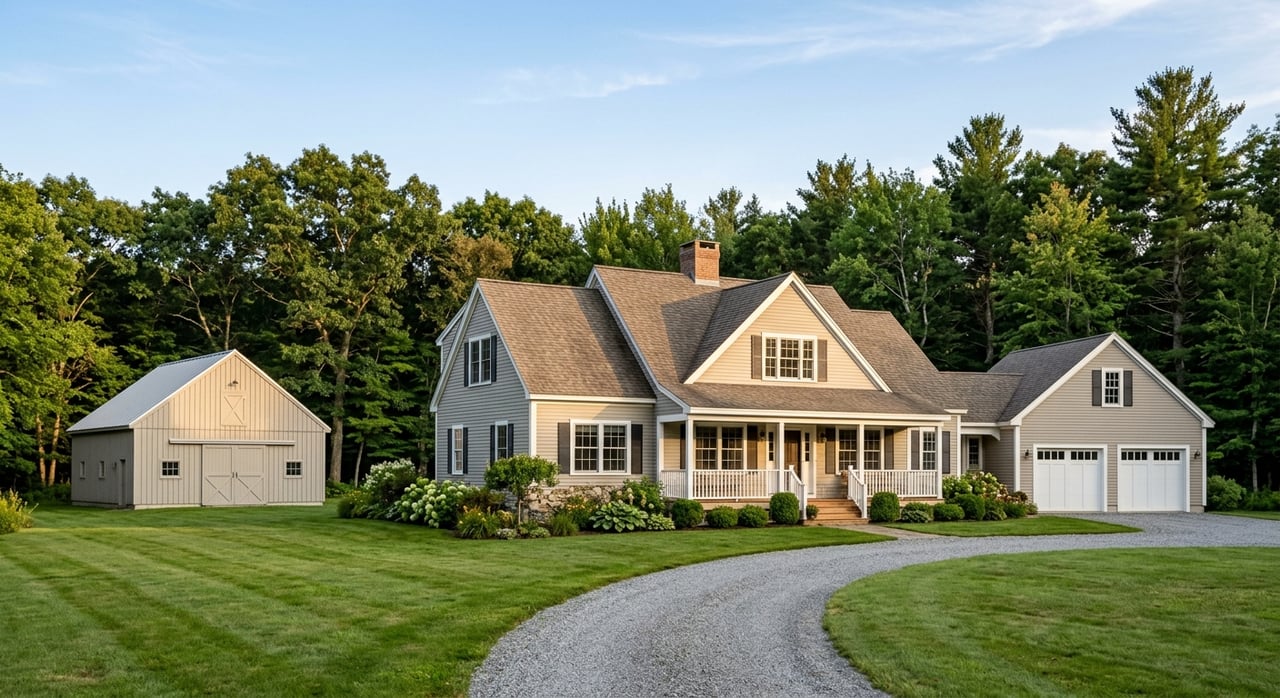
If you are dreaming about a little more space, a garden, a shop, or a small hobby farm near Norwood Young America, you are not alone. The appeal is easy to understand: more room to spread out, more flexibility, and a property that fits the way you actually want to live. The key is knowing that not all acreage works the same way, and the details can make a big difference. Let’s dive in.
Why acreage near NYA stands out
Near Norwood Young America, buyers will usually find two broad property types: standard residential lots in town and larger transition or agricultural parcels closer to the edge of town or outside city limits. According to the City of Norwood Young America zoning code and 2040 Comprehensive Plan, newly annexed land is zoned T/A, or Transition/Agricultural, until it is reclassified.
That matters because the rules can change a lot depending on where the parcel sits. Inside the city, residential lots are generally geared toward single-family living with limited accessory structures. Outside the city or in transition areas, larger outbuildings, hobby-farm uses, and future split questions may become more relevant.
Know the zoning before you buy
Zoning is one of the first things you should check on any land or hobby farm opportunity near Norwood Young America. A parcel may look perfect on paper, but the local rules determine what you can actually build, store, or use it for.
The first question is simple: is the property inside city limits, in a city T/A area, or in Carver County agricultural zoning? That answer shapes nearly everything else, from outbuilding size to utility setup.
City R-1 lots have tighter limits
Within the city, the R-1 Low Density Single Family Residential District has a minimum lot size of 10,000 square feet. The city also limits detached accessory structures based on lot size, with combined accessory floor area ranging from 1,000 square feet on smaller lots up to 1,600 square feet on lots of 43,561 square feet or more, and no more than two detached accessory structures are allowed, according to the city code.
The city also regulates where those structures can go and how they are built. Accessory structures cannot be placed in the front yard, must meet setback rules, and need a minimum 4:12 roof pitch. Certain exterior materials, including galvanized or unpainted metal, plastic, canvas, and fabric, are prohibited unless an agricultural-building exception applies.
T/A zoning can fit small-acreage goals
The city’s T/A district is often the most relevant category for buyers looking at small acreage or hobby-farm style use within the city framework. The district permits farms excluding livestock, nurseries and greenhouses, and single-family detached dwellings on separately owned parcels of at least 2.5 acres within a quarter-quarter section, based on the Norwood Young America zoning ordinance.
Livestock may be allowed as a conditional use up to one animal unit per acre. The code also lists lot standards of 40 acres for a farmstead, 2.5 acres for a single-family parcel, and 10 acres for stables or kennels. Accessory uses can include garages, sheds, outbuildings, and agricultural buildings such as silos or grain elevators.
County AG zoning changes the picture
If the parcel is outside the city, Carver County zoning takes over for township properties. In the county’s AG district, accessory storage structures and detached hobby structures are allowed, and the size limits scale with parcel size. For parcels larger than 10 acres, the combined garage and accessory structure area can reach 7,000 square feet under the Carver County code.
The county code also notes that existing agricultural structures are generally not counted toward that accessory total unless they are suitable for use as garages or residential accessory buildings. On parcels of 20 acres or more, agricultural structures must relate to commercial agricultural activity and may be exempt from the State Building Code if they meet county standards.
Outbuildings and hobby use matter more than acreage alone
A common mistake is assuming that more acres automatically mean more freedom. In reality, acreage and zoning work together. Two similarly sized parcels near Norwood Young America may allow very different uses depending on whether they fall under city residential rules, city transition zoning, or county agricultural standards.
If your goal is a workshop, storage building, greenhouse, barn, or detached garage, ask for the zoning details early. You will want to know how much square footage is allowed, how many structures are permitted, where they can be placed, and whether your intended use needs a conditional approval.
Utilities can affect both cost and convenience
Utility setup is another major factor when you compare land opportunities near NYA. Within Norwood Young America, the city maintains water and wastewater service, and the city lists Xcel Energy, CenterPoint Energy, and local communication providers for services in town.
For rural parcels, the question is often whether the property is connected to municipal utilities or relies on a private well and septic system. That difference can affect not only your monthly costs, but also your due diligence timeline, future improvements, and lender requirements.
Private wells need ongoing attention
Carver County states that all residents rely on groundwater and that private-well testing is the owner’s responsibility. The county notes that the Minnesota Department of Health recommends annual testing for coliform bacteria and testing every other year for nitrate.
The county also says unused wells must be sealed by a Minnesota-licensed well contractor. If you are buying a rural property, well history and testing should be part of your review process, not an afterthought.
Septic compliance can shape the deal
Septic is often one of the biggest practical issues on land and hobby farm properties. Carver County’s SSTS rules require sewage to be properly treated or handled by a municipal system. For new systems, the county requires 12 inches of separation between limiting soil conditions and the original ground surface, along with primary and alternate soil-treatment sites for new lots under 20 acres, according to the county code.
For properties being sold with septic systems, the county says sellers must disclose how sewage is managed. If there is no certificate of compliance, escrow may be required to assure installation of a compliant system.
Buildability and split potential should be checked early
If you are buying acreage with future plans in mind, buildability matters just as much as current use. Some buyers want room for one home and a shop. Others are thinking long term and want to understand whether a parcel may allow a future split or another building site.
Carver County’s minor subdivision checklist shows why this step should happen early. The county may require a survey, certification of existing septic systems, septic escrow before recording in some cases, and current property taxes before recording. The checklist also flags a 1,000-foot separation from a feedlot for a new home or building site.
The county also directs buyers and owners to review building eligibility questions, including whether a parcel has already used a building eligibility and whether any remaining eligibility could be transferred or split later under the county ordinance. For many land buyers, that is one of the most important questions on the table.
Financing options depend on the property setup
Land and hobby farm financing is often more nuanced than financing a typical in-town house. The right loan path can depend on whether the property will be your primary residence, how the parcel is configured, and whether the improvements are straightforward or more specialized.
USDA may help owner-occupants
For buyers planning to live on the property, USDA Rural Development may be worth exploring. USDA states that eligible applicants must occupy the property as their principal residence, and the agency highlights benefits such as no down payment, no private mortgage insurance, and up to 100 percent financing in its homebuyer program brochure.
USDA eligibility is address-specific, so it is important to verify the exact property rather than assuming a parcel qualifies because it feels rural. That simple check can save time before you get too far into negotiations.
Conventional loans may favor simpler setups
Conventional financing can still be a strong fit, but property details matter. Fannie Mae notes that multiple-parcel security properties generally must be adjoining unless an exception applies, need the same basic zoning, and must contain only one dwelling unit under its special property eligibility considerations.
In practical terms, a home with a typical garage or shop may be easier to finance than a property whose value depends on a more complex mix of land uses or structures. If the property is unusual, it is smart to ask financing questions before you write the offer.
1031 exchange buyers have different priorities
If you are buying for investment rather than as an owner-occupant, the financing conversation may take a back seat to tax strategy. The IRS says like-kind exchanges apply to real property held for productive use in a trade or business or for investment, but not to property held primarily for sale, according to its 1031 exchange guidance.
The IRS also states that replacement property must be identified within 45 days and the exchange completed within 180 days. For buyers looking at land near Norwood Young America as part of a 1031 plan, those deadlines make preparation and property screening especially important.
A smart buyer checklist for land near Norwood Young America
Before you make an offer, try to get clear answers to these questions:
- Is the parcel inside city limits, in a T/A transition area, or under Carver County AG zoning?
- How large can the home, garage, shed, barn, or shop be under that zoning?
- Does the property have municipal water and sewer, or private well and septic?
- If there is a septic system, is there a current compliance certificate or an escrow arrangement?
- Has the parcel already used a building eligibility, and is future split potential still available?
- If you want USDA financing or a 1031 exchange, does the property fit those program rules?
The more of this work you do upfront, the more confident your decision will feel. It can also help you avoid surprises after inspection, during financing, or later when you are ready to improve or resell the property.
What makes a parcel easier to resell
Even if you plan to stay for years, resale still matters. Properties with a clear legal and physical story are usually easier for future buyers to understand and finance. That often means documented building eligibility, known septic and well status, clear utility information, and outbuilding potential that fits the applicable code.
That kind of clarity is especially helpful on acreage, where small details can affect value in a big way. Buyers, lenders, and appraisers all tend to look for the same basics: legal use, practical access, serviceability, and a property setup that makes sense.
If you are comparing land or hobby farm opportunities near Norwood Young America, having a local team that understands both the neighborhood side and the technical side can make the process much smoother. From zoning questions to acreage value and long-term potential, Chestnut Realty is here to help you sort through the details and move forward with confidence.
FAQs
What zoning should you check for land near Norwood Young America?
- You should confirm whether the parcel is inside city limits, in the city’s T/A Transition/Agricultural district, or in Carver County AG zoning, because each category has different rules for homes, outbuildings, and land use.
What can you build on a hobby farm parcel near NYA?
- What you can build depends on the parcel’s zoning, lot size, setbacks, and whether the intended structure is considered an accessory building, agricultural building, or a use that needs additional approval.
What should you know about septic on rural property in Carver County?
- You should verify whether there is a current compliance certificate, because the county requires sellers to disclose sewage management and may require escrow if a compliant septic system is not already documented.
How do private wells work on acreage near Norwood Young America?
- On rural properties, well testing is the owner’s responsibility, and Carver County notes that private wells should be tested regularly for items such as coliform bacteria and nitrate.
Can you use USDA financing for a property near Norwood Young America?
- Possibly, if the property is in an eligible rural area and you will occupy it as your principal residence, but USDA eligibility should always be confirmed for the exact address.
What should investors know about 1031 exchange timelines for land purchases?
- The IRS says replacement property generally must be identified within 45 days and the exchange completed within 180 days, so timing and property screening are critical for 1031 buyers.